






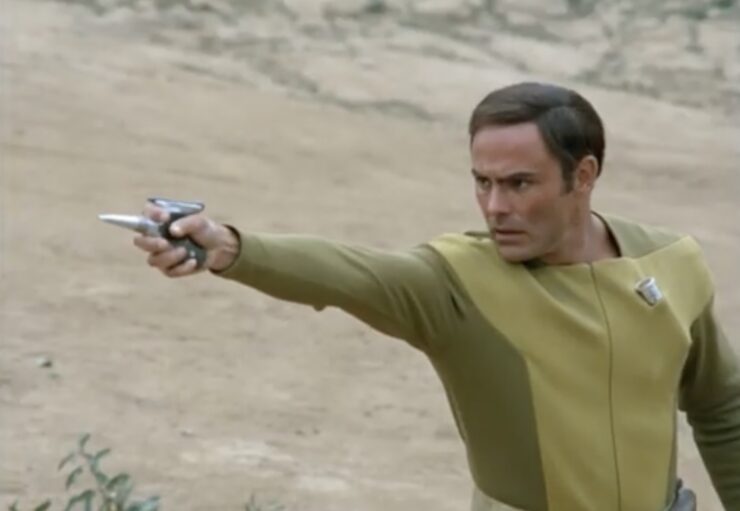
On June 3, 1969, Star Trek (aka Star Trek: The Original Series) aired its final first-run episode, “Turnabout Intruder.” Canceled by NBC after three seasons and 79 episodes, Star Trek was a groundbreaking but expensive show that, while scoring decent ratings, never became the kind of hit that justified the network keeping it on the air. As the cast and crew went their separate ways, as the sets were dismantled, and as the show was seemingly destined to fade into the mists of TV history, one question remained: what would its creator do next?
Star Trek was the brainchild of Gene Roddenberry, a former Los Angeles police officer turned journeyman TV writer. Star Trek was the second series that he created and shepherded to the air (following The Lieutenant, which lasted only a single season), but as a result of the show’s cult success, his name became inextricably tied to the series to the point that it became the dominant part of his personal and professional identity.
But after Star Trek was canceled—and before it blossomed from cult TV show into pop culture phenomenon—Roddenberry still had a career to continue, a living to make, and a family to feed. What did he do during the decade between the end of the original show and the release of Star Trek: The Motion Picture in 1979? The short answer is that, like any writer or producer working in Hollywood, Roddenberry pursued other projects for both the big and small screens. Yet none of them achieved the kind of success that Star Trek had achieved, and many of them didn’t stray very far from the concepts and ideas that fueled his beloved science fiction series.
While the projects he worked on during the ‘70s are interesting to view today as objects of curiosity—and a couple of them now seem either wildly inappropriate or of questionable taste—few of them had the same creative fire or sense of imagination as his greatest concept. In the end, for better or worse, all roads led Gene Roddenberry back to Star Trek.
Roddenberry could not immediately get work after Star Trek was canceled; he felt that he was pigeonholed as a sci-fi writer and now had a reputation for being difficult to work with due to his constant fights with NBC to keep Star Trek on the air. By the dawn of the 1970s, he was badly in need of income. According to Joel Engel’s Gene Roddenberry: The Myth and The Man Behind Star Trek, MGM vice president Herb Solow—who had helped Roddenberry develop Star Trek at Desilu Studios—did Roddenberry a favor by paying him $100,000 to produce and pen the screenplay for a film called Pretty Maids All in a Row.
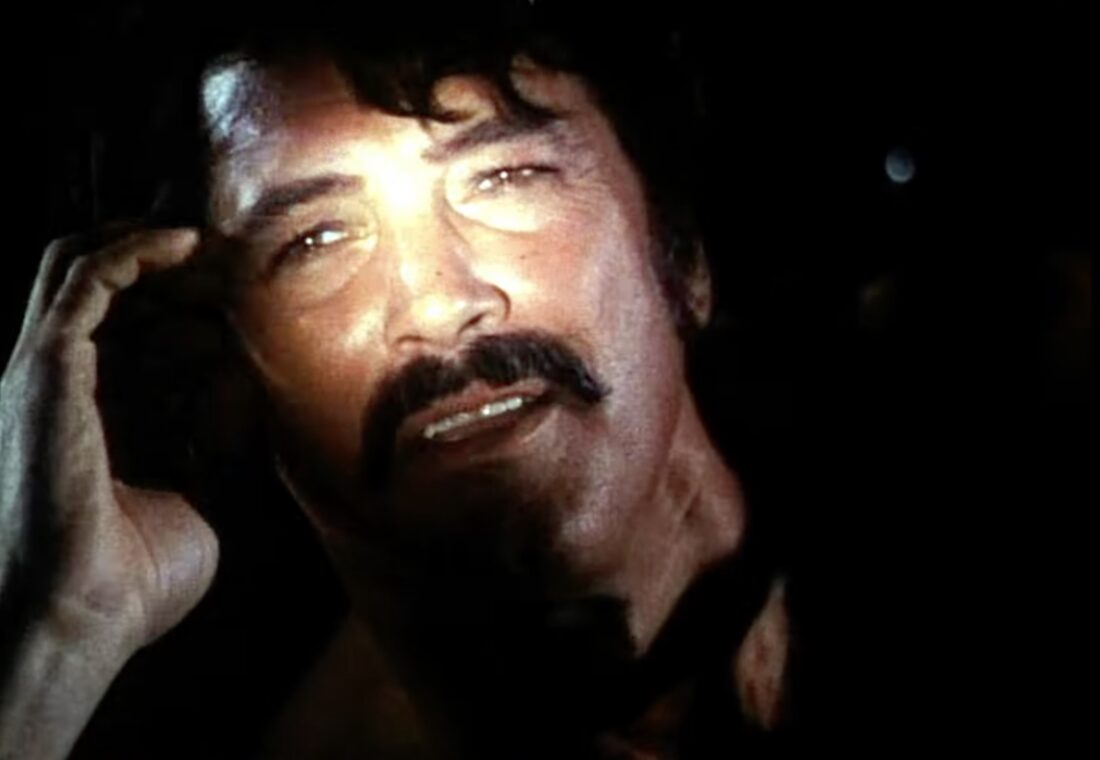
Based on a novel by Francis Pollini, Pretty Maids starred Rock Hudson as the beloved assistant principal, football coach, and guidance counselor at a California high school, who uses his popularity with the students to sleep with as many of the female students as he can. At the same time, he encourages an attractive, divorced substitute teacher (Angie Dickinson) to seduce an awkward male student he’s mentoring, hoping it will give the boy more confidence with women and himself. Then one of the girls that the Hudson character has bedded threatens to expose their tryst, leading to a series of murders on campus.
Viewed now, Pretty Maids All in a Row is—to say the least—incredibly unseemly. While bolstered by a solid cast (which also included Telly Savalas, Keenan Wynn, Roddy McDowall, and Star Trek holdovers James “Scotty” Doohan and William “Trelane” Campbell), the film’s attitude toward Hudson’s sexual exploits with his students is casual at best. All the girls—costumed in ultra-mini skirts by William Ware Theiss, the same costume designer who put all the female Star Trek officers in short skirts—are seen as none-too-bright but all-too-willing participants in Hudson’s ongoing abuse of his power. Dickinson’s character, meanwhile, is so sexually frustrated that her token reluctance to have sex with a teenage boy is quickly cast aside.
Pretty Maids was directed by Roger Vadim, who sculpted Brigitte Bardot and Jane Fonda into “sex kittens” in films like And God Created Woman and Barbarella. While Roddenberry expressed disappointment in the finished film, it seems likely that his view of women—one shaped by the prevailing attitudes of the time, the omnipresent “male gaze,” and his own appetites (depending on the account, Roddenberry was either a progressive, a libertine, or a wanton philanderer when it came to sexual relationships)—more or less meshed with that of the director. But the tone of the film, a combination of sex comedy and murder mystery that never gels into anything coherent, doomed it as much as its outdated values.
Pretty Maids was not a success with either critics or moviegoers, and while Roddenberry did develop other feature film scripts (more on that below), he was inevitably forced to return to television and the science fiction genre. While eking out a living as a lecturer at colleges and on the then-nascent Star Trek convention circuit, Roddenberry found himself developing a number of proposed TV series for CBS, ABC, Warner Bros. Television, and even NBC, despite his struggles with the latter network and his overall reputation. Of the ones he actively developed, he produced pilots for four—all of which aired as TV movies but were not picked up as series.
The first of these was Genesis II (1973), in which Alex Cord starred as Dylan Hunt, a scientist who awakens from an experiment in suspended animation some 154 years into the future, where he learns that nuclear war destroyed much of civilization shortly after he went under, and that humankind is only now slowly rebuilding itself, albeit in scattered, often primitive societies. The most advanced of these, called PAX, works to help the other communities, accessing most of what used to be the United States (and, it’s implied, the world) through a high-speed underground railway that was completed shortly before the war.
In the pilot/TV movie, Hunt is initially recruited by a race of mutants called the Tyranians (subtle, eh?), who claim to want to rebuild society but in fact want to enslave the rest of humanity (the Tyranians can be identified by their two navels, an in-joke by Roddenberry since NBC forbade the showing of navels less than a decade earlier on Star Trek). Although Hunt, not really knowing which way is up in this altered world, is torn at first between the two groups, he eventually aligns with PAX, and the movie ends with the promise of further adventures for him and PAX as they encounter the various societies and tribes springing up around the globe.

As with several of the other projects he developed during the course of the ’70s, Genesis II incorporates ideas that had first prospered on Star Trek. The “man out of the past” concept was best exemplified by the classic “Space Seed” episode, in which 20th century dictator Khan is reawakened by the crew of the Enterprise. In fact, in his book The World of Star Trek, David Gerrold described the premise of Genesis II as “Star Trek without the Enterprise.” Had Genesis II gone forward as a series, Hunt and his team would venture every week to a new society and solve whatever problems they encountered there. The subway was a combination of the Enterprise and the transporter, getting the heroes in and out of situations on a rapid basis.
As an earthbound version of Star Trek, Genesis II certainly showed promise. But the movie itself hasn’t aged well: the costumes (again by Theiss) are all flowing robes and peekaboo dresses, while Hunt is both a brilliant scientist and a fountain of double entendres (it doesn’t help that the female villain, a Tyranian spy played by Mariette Hartley, uses sex to snap him out of his post-slumber fog). It’s got some scale by 1970s TV movie standards, although it’s tough to imagine the network not reusing the same old sets and locations to keep the budget in line.
We never got a chance to find out whether the series would have worked; although CBS encouraged Roddenberry to develop the series—with half a dozen scripts ordered—the network had a change of heart and abruptly pulled the plug thanks to another iconic sci-fi property: Planet of the Apes. Stunned by the high ratings generated from the original movie’s network premiere on CBS, the execs decided to scrap Genesis II and forge ahead with a Planet of the Apes program (debuting in 1974, it lasted for 14 episodes).
Undaunted, Roddenberry reconfigured the concept as Planet Earth and took it to ABC, which commissioned a new pilot (shades of NBC ordering a second Star Trek pilot after rejecting the first one) with a revamped cast. John Saxon starred as Hunt in this version, in which he’s already established as a member of PAX and leader of a team tasked with bringing civilization and peace to the different societies they discover via the underground subway. The new pilot, which was also aired as a TV film, was far more action-oriented than Genesis II, with the Saxon version of Hunt much more of a conventional action hero prone to fisticuffs—like a certain starship captain—than the previous version’s more conflicted protagonist.
Unfortunately, the society that Roddenberry (with the help of co-writer Juanita Bartlett) had Hunt and his team infiltrate was a matriarchal one, in which the women were the rulers and the men were treated as slaves, pets, or sexual playthings. “Women’s lib gone mad,” as Hunt utters in the show—an example of Roddenberry’s ham-fisted approach—and the costumes again don’t do the women any favors in multiple fight or action scenes.
Planet Earth was not greenlit as a series either, but the idea refused to die: a new variation, called Strange New World and once again starring Saxon, aired on ABC in 1975. Roddenberry quit early in the development process for this version, and is not credited as either a writer or producer on the film, which—like the first two attempts—did not yield an ongoing series. Yet Roddenberry’s idea of a human from one time period being reawakened in the future to lead a societal restoration kept resurfacing: in the series Andromeda (2000-2005), which was based on unused material left behind by Roddenberry after his death, the main character is “frozen in time” for 300 years. His name? Dylan Hunt.
The first inklings of a Star Trek revival began to surface around 1973. Roddenberry was hired as an “executive consultant” on the short-lived Star Trek: The Animated Series (1973-1974), where his job was basically reading the scripts and giving notes. Yet the success of the original show’s reruns in syndication and the growing fandom prompted discussions between NBC, Paramount, and Roddenberry about either a movie or a new series. Roddenberry also employed many members of the original Star Trek cast and crew on his other projects during this time, including James Doohan, Walter Koenig, Diana Muldaur, Mariette Hartley, his wife Majel Barrett, director Marc Daniels, and writers Samuel A. Peeples and Gene L. Coon.
Among the other series he developed during these years, which never got to the screen, was a futuristic police show called The Tribunes, a bizarre semi-autobiographical script called The Nine (in which the creator of a 1960s sci-fi TV show is hired to write a film that will prepare humanity for the arrival of a superior alien race), and a screenplay titled Magna 1, in which a future Earth is divided between those who live on the land and those who live in the water. Another proposed series, Battleground: Earth, in which seemingly benevolent alien visitors infiltrate human civilization, also went nowhere, but some of the material was repurposed years later for the show Earth: Final Conflict, which ran for five seasons between 1997 and 2002.
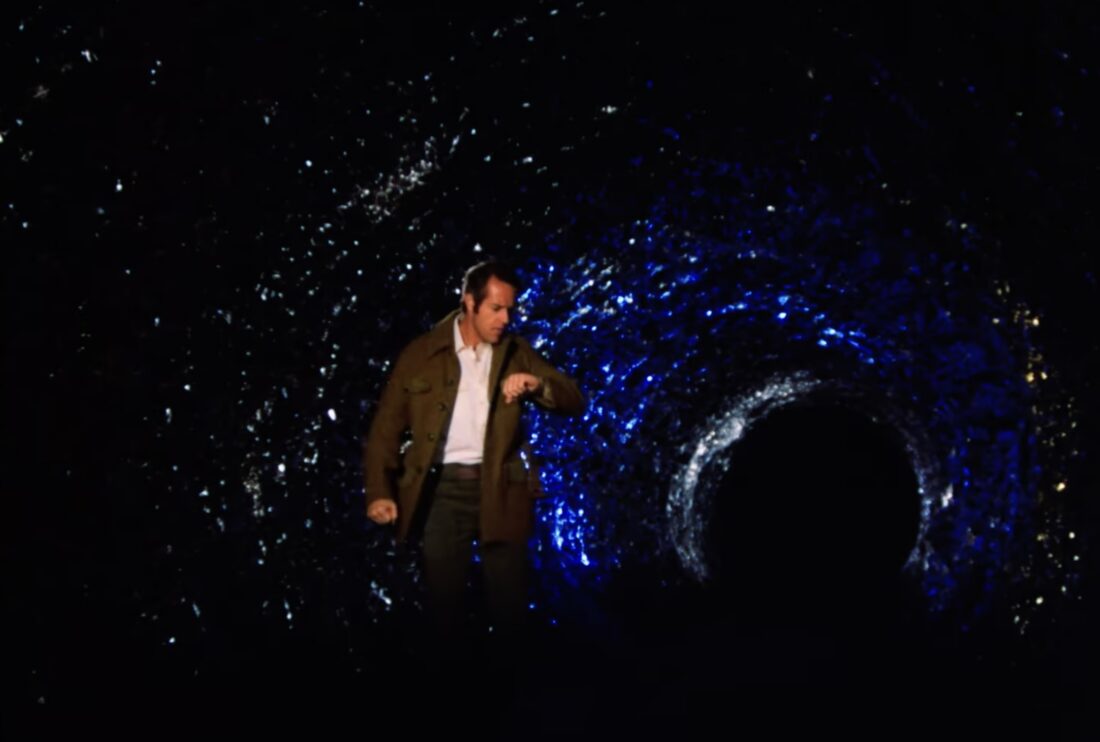
Roddenberry did get two more projects onto television screens before Star Trek returned for good and essentially ate up the rest of his career, and both were arguably an improvement over the Genesis II/Planet Earth films. The first—and almost undoubtedly the best—was The Questor Tapes, a pilot that aired on NBC in January 1974. Directed by Richard Colla and co-written by Roddenberry and Gene L. Coon—who had written and produced many of Star Trek’s finest episodes—the film starred Robert Foxworth as Questor, an android created by a mysterious scientist named Vaslovik, whose disappearance has left Questor’s memory banks and programming incomplete. With the help of Vaslovik’s assistant, a brilliant engineer named Jerry Robinson (Mike Farrell), Questor sets out to find his creator—with the organization that funded the entire project hot on their heels to capture Questor for their own ends.
Roddenberry wrote the part of the unemotional Questor for Leonard Nimoy, but Robert Foxworth (who was cast without Roddenberry’s input) does an excellent job as the synthetic, whose combination of logic, strength, and child-like innocence can be seen in retrospect as the template for Data on Star Trek: The Next Generation. Farrell is equally empathetic as Robinson, who teaches Questor human values and emotions on their journey together—a relationship that in some ways was similar to that of Mr. Spock and Dr. McCoy on Star Trek. The film ends with Questor discovering the fate of Vaslovik and his own true purpose—a solid science fictional concept that could have provided the groundwork for a thought-provoking series.
But again, it was not to be: Although the pilot sold, the series was scheduled, and work started on the first dozen episodes, the executives at the network began to request changes. They wanted the ending of the film—where Questor meets Vaslovik and learns they are both androids, created by an ancient race to subtly guide humankind—ignored completely, and they wanted the Mike Farrell character eliminated, removing the logic/emotion dynamic that was supposed to power the series. Roddenberry walked and the series collapsed.

The last project he created before the return of Star Trek, called Spectre, was yet another unsold pilot that was broadcast by NBC (which seemed to have a love/hate relationship with the man) in May 1977 and released theatrically in the U.K. A horror-occult outing, it starred Robert Culp (The Outer Limits) and Gig Young as a pair of paranormal detectives investigating cases involving the supernatural. With Culp as the “scientist” and Young as his medical counterpart, the story in some ways reflected the same Spock-McCoy relationship that The Questor Tapes also tapped, while the “occult investigators” angle foreshadowed the arrival of shows like The X-Files.
By the time Spectre aired, the revival of Star Trek—a labyrinthine journey that could easily warrant its own article—was in full swing. Paramount, which co-owned the property with Roddenberry, initially proposed a modestly-budgeted feature film; after two years of rejecting one story pitch after another, the studio pivoted, deciding in 1977 that a new Star Trek series would serve as the anchor for a fourth broadcast television network. The show, called Star Trek: Phase II, was weeks away from production, with all the original cast except Leonard Nimoy, when the success of a little movie called Star Wars convinced the powers-that-be that the future of Star Trek did in fact lay on the big screen—as a blockbuster major motion picture.
That process resulted in 1979’s Star Trek: The Motion Picture, the sole Star Trek movie that Roddenberry produced. Nearly capsized by budget overruns and creative conflicts, the movie was nevertheless a hit that jumpstarted the resurrection of the franchise. Roddenberry acted as only a “consultant” on succeeding Trek films, but did create Star Trek: The Next Generation for television in the mid-1980s, his last significant project until his death in 1991. While Roddenberry had tried to diversify himself as a writer and producer, he could never escape the shadow of his most famous creation, nor did many of its concepts ever seem very far from his mind. Star Trek—which continues to this day through movies, hundreds of hours of television, books, comics, merchandise, games, and more—became his singular legacy.
Sources

Pretty Maids very much embodies a male fantasy interpretation of the Sexual Revolution as meaning “Yay, hot women/girls will no longer be reluctant to sleep with me!” But it interests me that Roddenberry wrote Hudson’s character, ultimately the villain of the film, as something of a self-portrait, a womanizer but also an idealistic philosopher. Similarly, Sir Geoffrey in Spectre is a Roddenberry-like hedonist/womanizer who’s also painted in an antagonistic light. I’ve wondered, was that just the only way he could sneak such things past the censors, or did it reflect some ambivalence about his own proclivities?
One thing that rarely seems to get mentioned about Pretty Maids is that it’s a toned-down adaptation of a much more graphic hardcore porn novel. I’ve read that it was one of the first American movies to have nude scenes after the introduction of the R rating.
I was worried there for a moment that you were going to omit the animated Star Trek, which actually ran from 1973-75. The ironic thing about TAS is that it’s the one Trek production where Roddenberry was given complete creative control without network interference — something very rare in American TV, a distinction shared only by The Simpsons as far as I know — yet Roddenberry chose not to exercise that control much and handed off responsibility for the show to story editor D.C. Fontana and Filmation producer Lou Scheimer. And then later in life he distanced himself from it altogether.
My understanding about Strange New World is not that Roddenberry quit early in development, but that he allowed Warner Bros. to develop a new take on his premise after he moved back to Paramount to work on reviving Trek. The pilot doesn’t credit Roddenberry in any way despite being obviously based on his Genesis II/Planet Earth concept. It’s also amazingly terrible. For all his weaknesses as a writer and producer, Roddenberry still had a better grasp of science fiction than most other people working in American television in the 1970s-80s.
The Questor Tapes was basically Roddenberry’s third attempt at the premise of “Assignment: Earth,” which he initially wrote as a standalone half-hour pilot in 1966 before reworking it into a backdoor-pilot episode of TOS. He liked the idea of a cool, intellectual, superior being helping humanity survive the crises of the 20th century and shepherding us toward maturity, so when he failed twice with Gary Seven, he reworked the premise around an android. Questor, in turn, became part of the inspiration for Data in The Next Generation. (The other part was Xon, the young Vulcan from Star Trek Phase II who sought to explore his emotions to understand his human crewmates better.)
Interesting insight about Gary Seven — I think he didn’t come up in my mind because he was a human who just had cool alien tech, and not an alien himself or an android.
Looking back at all these projects, Roddenberry certainly projected a lot of his own personal persuasions into a number of these characters…and it just all seems so terribly dated and out of touch now. He did clearly come up with some terrific sci-fi concepts, but his ideas exceeded his writing talent and got mixed up with his personal foibles.
People are complicated and most of us find our beliefs at odds with our behavior at some point in our lives; for some of us, at many points in our lives (about all kinds of things, I don’t just mean sex).
“([D]epending on the account, Roddenberry was either a progressive, a libertine, or a wanton philanderer when it came to sexual relationships” might not be a mutually exclusive list of possibilities, and Roddenberry wouldn’t have been the first or last person to hold idealistic and progressive views about feminism and sexual expression while hypocritically behaving like a pest or cad or even abusively in his personal conduct with people around him.
And so, too, in his writing. Perhaps consciously and with self-awareness that a character with his own foibles might be a villain, or perhaps unconsciously, simply putting things he liked into a project and not recognizing the tensions or outright contradictions.
The similarity between Assignment: Earth and Questor would’ve been in the format intended for both, the cool genius hero and his more emotional partner using his secret alien tech to quietly guide humanity through its turbulent adolescence. If both series had gone ahead as Roddenberry had planned, the similarity would’ve been more evident in the kinds of stories-of-the-week they did.
I’m not sure I agree that Roddenberry’s ideas exceeded his writing talent — I think it was often the other way around. If you look at the TOS episodes where he has an actual script or story credit, aside from “The Cage,” they tend to be among the worst, silliest, most sexist concepts in the series — e.g. “Mudd’s Women,” “Bread and Circuses,” “The Omega Glory,” or “Turnabout Intruder.” (“Glory” was also probably the most racist episode, actually using the phrase “yellow race” in dialogue and equating American-ness with whiteness.) Yet as showrunner, Roddenberry wrote the final draft of nearly every script in seasons 1-2, so it was his dialogue writing and character writing that helped give the show its consistent quality. So I’d say he was better at bringing the best out of other people’s ideas than he was at coming up with ideas of his own.
I read about a Roddenberry script for a proposed Tarzan movie which would emphasize the sexual nature of the Lord of the Jungle. Probably would have made that Bo Derek Tarzan opus eligible for Disney+.
Have you seen the Bo Derek Tarzan? It’s already got significantly more nudity than Pretty Maids had (including Derek being continuously topless or nude for the entire final 20 minutes of the film, including the end credits). I doubt even the most indulgent Roddenberry version would’ve been any racier. (Not that I recommend it — it’s a truly terrible film, not just badly written and acted but incompetently made as well.)
I did see it, and I agree with you 100%. However, if Roddenberry’s Tarzan had let its freak flag lly, it would have been something to behold.
After all, this is the same man who conceived of one TNG character with three breasts (and I am not referring to the android).
He conceived of Troi having three breasts, or maybe four. And it was hardly an uncommon idea in sci-fi; see Total Recall or The Hitchhiker’s Guide to the Galaxy, or the felinoid dancer on Nimbus III in Star Trek V (which Roddenberry had no influence over except as a nominal consultant).
People today like to single out Roddenberry for being a horndog or pervert or something, but really, his attitudes were pretty much typical of the men writing and producing TV and film in that era, or even prose science fiction. There were plenty of others who took it just as far or even farther.
I am still extremely fond of Spectre, even if it’s rather cheesy by today’s standards. I was a senior in high school when it came out, and loved it. I see Culp and Young much more of a Holmes and Watson duo. It also had Majel Barrett as Culp’s Witch housekeeper, and John Hurt in a wonderful role. I always felt it was another case of Roddenberry being ahead of his time. Sadly, Gig Young married one of the actresses from the film and a year later killed her and himself in a murder suicide.
Yes, Spectre was very much intended as a supernatural take on Holmes and Watson. I found it a mixed bag. Culp was great as usual, but Young was disappointing and didn’t have enough chemistry with Culp, and knowing what Young would do a year later made him creepier to watch than the Satanic cultists in the movie. Imagine if the show had gone to series and that had happened during production. Even without that, Young’s alcoholism would’ve probably made him too difficult to work with and they would’ve had to replace or recast the character.
Was it ahead of its time, though? I think that movies about Satanic cults were very much in vogue in the 1970s. Although I remember David Gerrold writing about the premise in The World of Star Trek and saying that Roddenberry felt there were too many shows/films that had the supernatural elements turn out to be hoaxes, and he wanted to do something that played it straight for a change. I don’t know what that opinion was based on, though, other than maybe Scooby-Doo.
Spectre is the one ’70s Roddenberry TV pilot movie that I don’t consider part of the Star Trek multiverse. I’ve always chosen to believe that The Questor Tapes took place in Trek’s 20th century; I and one or two other licensed novelists have even implied in our books that Noonien Soong’s work with androids was descended from Project Questor, though we couldn’t say so explicitly because TQT was from Universal rather than Paramount. And since Genesis II/Planet Earth is set after an apocalyptic nuclear war in the 1990s, I see it as a timeline where the Eugenics Wars of the 1990s were larger and more devastating — specifically, it’s the timeline where Gary Seven wasn’t there to prevent the proliferation of orbital nukes. But since Spectre is overtly supernatural, it doesn’t fit. I dabbled with the idea of interpreting the supernatural elements as aliens misinterpreted as demonic, as in “Catspaw” or “The Magicks of Megas-tu” (or the original 1966 pilot script of Assignment: Earth), but I felt that would be disrespectful to Roddenberry’s intent to embrace the supernatural sincerely.
I suppose there’s nothing in Pretty Maids All in a Row that would preclude it from taking place in the Trek universe, but would we really want it to? And it didn’t originate with Roddenberry, but was adapted from a novel (and he was the second screenwriter, brought in along with Vadim after the first writer and director didn’t work out).
I enjoyed the run-through of Questor, et al. on your blog some time ago.
Thank you!
I find the criticism of Pretty Maids a bit odd, coming as it does right after the discussion of him being relatively desperate for work/cash. doesn’t seem reasonable to claim that a commercial product, made to contemporary standards (even if by later standards a bit eww), for commercial purposes and for a paying job, somehow makes a deep statement about the producer’s character. seems like he was a guy doing a job he was paid for – maybe that’s why there are so many different opinions about his attitudes toward sex and women – too many people reading too much into his work.